
Comprehensive CNC Machining Materials & Design Guide

From DFM analysis and mold making to injection molding and assembly, we manage every step in-house to turn your designs into reliable production parts

MATERIAL COMPARISON

MATERIAL LIST

Lorem ipsum dolor sit amet, consectetur adipiscing elit. Ut elit tellus, luctus nec ullamcorper mattis, pulvinar dapibus leo.

Material
When It Works Well
What to Consider
PP
Polypropylene
PP Polypropylene
When It Works Well

Suitable for lightweight parts, PP plastic boxes, storage boxes, connectors, covers, clips, brackets, household parts, pet product parts, and industrial components.

What to Consider

PP is cost-effective and moisture-resistant, but shrinkage, warpage, surface adhesion, and dimensional control should be reviewed before tooling.

ABS
ABS
When It Works Well

Suitable for rigid housings, electronic enclosures, appearance parts, painted parts, and products requiring better surface finish.

What to Consider

ABS usually offers better surface appearance than PP, but it may not be the best choice for moisture resistance, chemical resistance, or living hinge structures.

PE
Polyethylene
PE Polyethylene
When It Works Well

Suitable for flexible parts, impact-resistant parts, chemical-resistant parts, and applications that need a softer material feel.

What to Consider

PE is flexible and chemically resistant, but it usually has lower rigidity and may not be ideal for parts requiring stable assembly fit.

PA
Nylon
PA Nylon
When It Works Well

Suitable for stronger mechanical parts, wear-resistant components, gears, bushings, and high-load functional parts.

What to Consider

PA offers higher strength and wear resistance, but it absorbs more moisture and may require tighter material and process control.

PC
Polycarbonate
PC Polycarbonate
When It Works Well

Suitable for high-impact parts, transparent parts, protective covers, and applications requiring higher strength.

What to Consider

PC has better impact strength and transparency, but it costs more and may not be needed for cost-sensitive PP parts.

POM
Acetal
POM Acetal
When It Works Well

Suitable for precision moving parts, low-friction components, gears, sliders, and mechanical functional parts.

What to Consider

POM is good for wear and dimensional stability, but it may be over-specified for simple PP functional parts.
Bottom Note: If you are not sure whether PP is the right material for your part, send us your drawing, sample, or application requirements. We can help review material options before mold making.

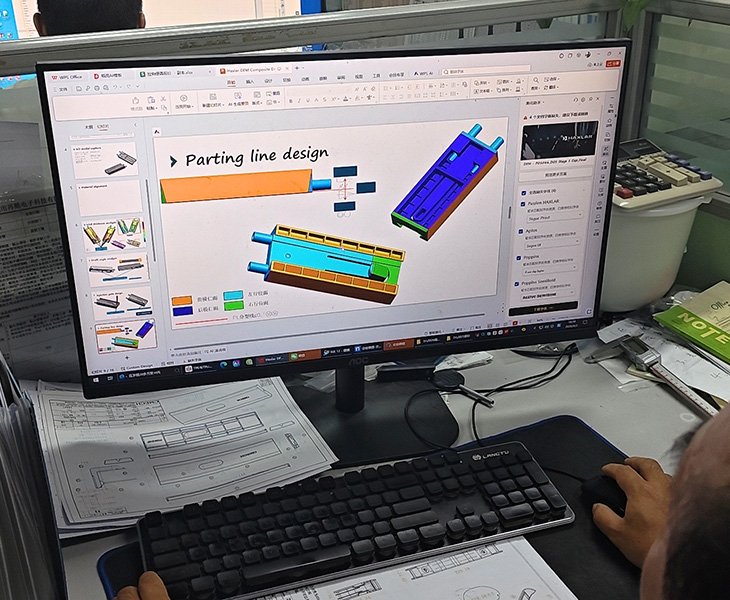
Strict DFM Review Before Tooling

Before beginning mold development, we conduct a rigorous review of your product’s structure, materials, and molding requirements to prevent design flaws, mold rework, product defects, production delays, and additional costs.

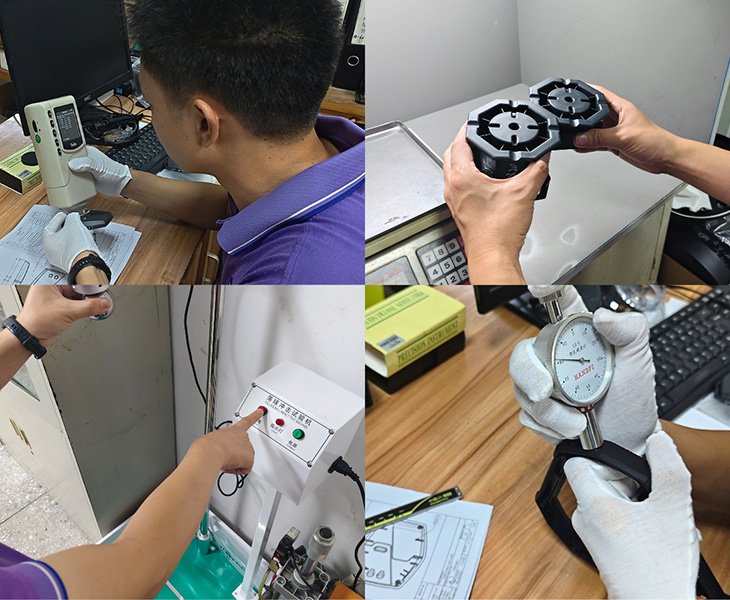
Strict Pre-Shipment Quality Inspection

Before shipment, we conduct rigorous quality control at every stage, including inspections of appearance, dimensions, assembly, and packaging, as well as environmental simulation tests to verify product reliability. As a result, whether it’s precision mechanical components, insulated parts, food-contact parts, automotive plastic parts, or sealing products—all of which have stringent quality requirements—we can ensure that every plastic part exhibits excellent dimensional stability and consistent appearance.

OEM Packaging Support Before Delivery

After quality inspection, we select the most suitable packaging method based on your part size, material, surface finish, precision areas, and shipping method. For OEM customers, we can also support customized packaging requirements, including product labels, part numbers, batch labels, barcode stickers, carton marks, user manuals, retail boxes, neutral packaging, or customer-specified packaging standards.

Frequently Asked Questions

Everything you need to know about our custom manufacturing services, capabilities, and processes.
We provide comprehensive custom manufacturing including high-precision CNC milling & turning, sheet metal fabrication, custom plastic injection molding, metal die casting, and diverse surface finishes.
We accept standard formats including STEP, IGES, STL, DWG, DXF, and PDF. 3D files with clearly specified tolerances and technical drawings are preferred for accurate DFM feedback.
We support flexible manufacturing from rapid prototyping (1 piece) to full mass production. There is no strict MOQ for most custom projects, though scaling volume offers better unit pricing.
Our engineering team conducts a rapid DFM review and provides a transparent, detailed quotation within 2 to 12 hours depending on project complexity.
Yes. Every shipment includes comprehensive material certification (RoHS, Reach, Mill Certs) and an inspection report (CMM dimensions, optical checks) to guarantee 100% quality compliance.
We offer a wide array of professional finishes including anodizing (Type II & III), bead blasting, laser engraving, powder coating, electroplating, brushing, and chemical film conversion.
Quality is verified at every stage using advanced equipment like CMM (Coordinate Measuring Machines), optical comparators, and height gauges to catch defects early.
Rapid prototypes typically take 3 to 7 business days, while volume production ranges from 12 to 25 days depending on the specific process complexity and quantity.
We ship globally via reliable express air carriers (DHL, FedEx, UPS) for urgent or lightweight parts, and secure ocean or rail freight for heavy volume production orders.
Absolutely. We take data security and intellectual property protection very seriously and are fully willing to sign a mutual NDA before any sensitive files are shared.
For standard custom projects, we typically accept T/T (wire transfer), PayPal for small prototyping samples, or flexible terms for long-term cooperative B2B partners.
We stand firmly behind our quality. If any part deviates from your approved drawings or specs, we offer prompt root-cause analysis, rework, or replacement at no additional cost.